
Technical
Robusta in Espresso Blends: Crema, Body, Caffeine and Blend Ratios
Why Italian espresso blends contain Robusta, what percentage actually does what, and how to evaluate Conilon Robusta as a blend component rather than as cheap Arabica.
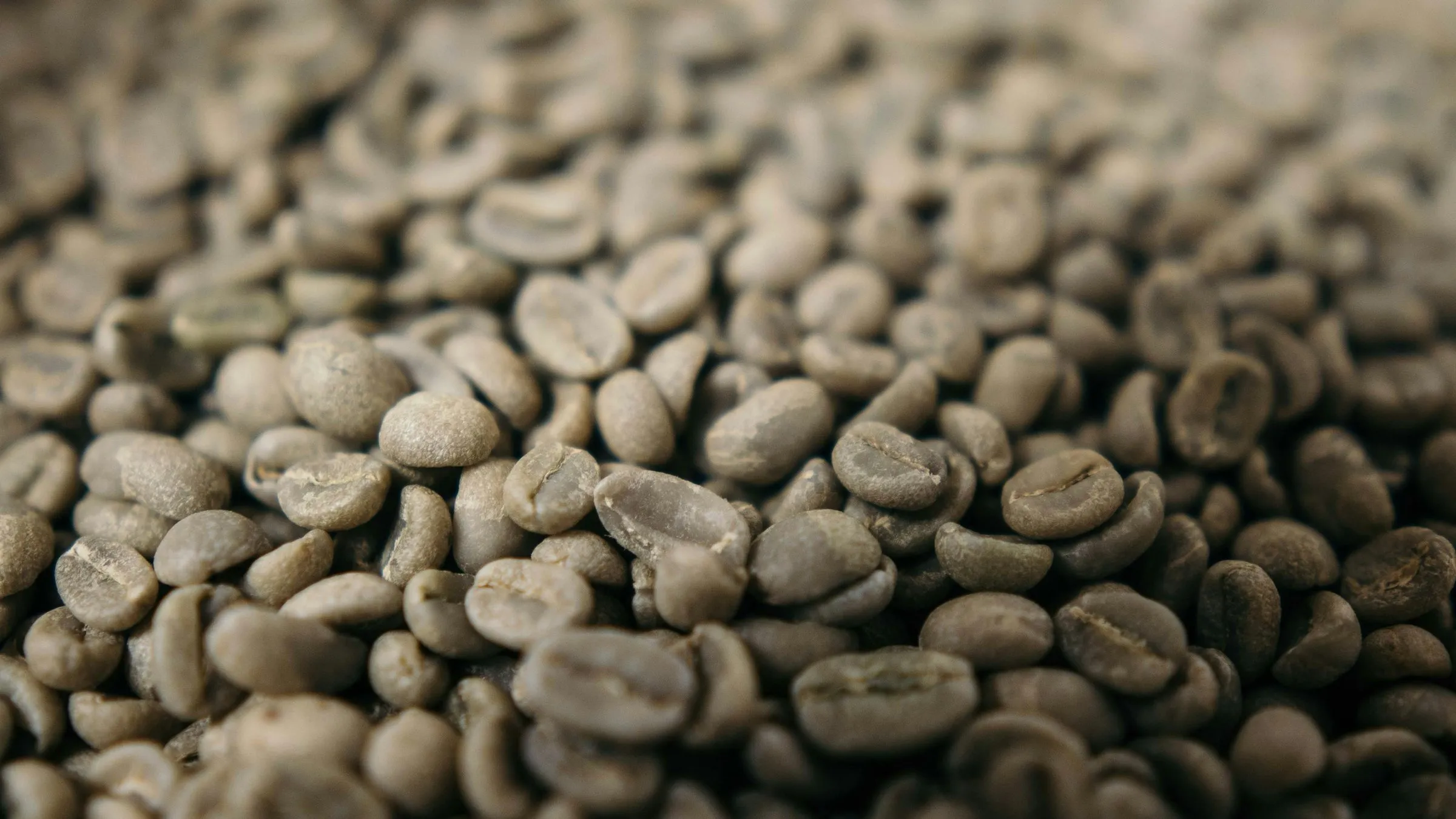
Robusta has a reputation problem in specialty coffee that its actual behaviour in an espresso blend does not support. The species is treated as a cost lever, which it can be, while the functional reasons Italian roasters have used it for a century get skipped.
This is a technical look at what Robusta does in a blend, at what ratio, and how to evaluate a specific lot rather than a whole species.
Why do Italian espresso blends contain Robusta?
Because it does three things Arabica does not do as well: it produces thicker and more persistent crema, it holds body through milk, and it carries roughly double the caffeine. Traditional blends from Naples and southern Italy have used it for these properties since long before the specialty market formed an opinion about it.
The cost argument is real but secondary. Robusta trades below Arabica, and a blend containing it costs less. But blends priced well above commodity contain it too, and reformulating them without it changes the drink in ways their customers notice.
What is Robusta, botanically?
Robusta is the international trade name for Coffea canephora. In Brazil the same species is called Conilon. They are not two coffees — they are two names for one species, used in different rooms. A Brazilian producer sells Conilon; a European importer buys Robusta; the beans are the same.
The other commercially dominant species is Coffea arabica. The two differ in ways that matter for espresso:
| Property | Arabica | Robusta |
|---|---|---|
| Caffeine (dry weight) | ~1.2 to 1.5% | ~2.2 to 2.7% |
| Chlorogenic acids | Lower | Higher |
| Lipid content | Higher | Lower |
| Perceived acidity | Higher | Lower |
| Body | Lighter | Heavier |
| Crema persistence | Lower | Higher |
| Chromosomes | Tetraploid (44) | Diploid (22) |
What does Robusta contribute to crema?
Crema is an emulsified foam of carbon dioxide, oils and soluble compounds, stabilised by surface-active material in the coffee. Robusta produces more of it and it lasts longer.
The practical effect is visible at low ratios. Ten to fifteen percent Robusta noticeably thickens the crema and slows its collapse, which matters for a bar serving drinks that sit on a counter for thirty seconds before reaching the customer. It is also why blends destined for automatic machines and high-volume service tend to contain it.
Higher chlorogenic acid content and a different lipid-to-protein balance are the usual explanations. What matters commercially is that the effect is reliable and reproducible, which is why it survived in traditional blends rather than being a matter of taste.
What does it do to body and to milk drinks?
Robusta adds weight. In a straight espresso that reads as a heavier, rounder mouthfeel with lower perceived acidity. In milk it reads as a coffee that is still present at the other side of the steam.
This is the property that decides most blend formulations in practice. A blend that tastes balanced as a straight shot can disappear entirely in a twelve-ounce latte, and adding Robusta is the most direct way to fix that without simply roasting darker. Roasting darker gets you body at the cost of everything else; a blend component gets you body without pushing the whole blend into carbon.
What blend ratio should you use?
There is no single correct answer, but there are recognisable bands.
- 5 to 10 percent. Subtle. Crema improves; most tasters will not identify Robusta as present.
- 10 to 20 percent. The common range for a modern blend wanting body and crema without a traditional profile.
- 20 to 40 percent. Recognisably traditional Italian. Heavier, lower acidity, more bittersweet.
- Above 40 percent. Southern Italian and many domestic Brazilian styles. The blend’s character is now Robusta’s character.
Start at the low end and move up in five-point steps, cupping and pulling shots at each stage, and evaluate in the drink you actually sell rather than only as a straight shot.
How should you evaluate a Robusta lot?
The same way you evaluate any green coffee, with one adjustment: use the right scale.
Robusta is scored under the CQI Fine Robusta protocol, which is a different instrument from the SCA Arabica protocol. A Robusta scoring 80 on the Fine Robusta scale is not equivalent to an Arabica scoring 80 on the SCA scale, and comparing them directly is a category error that leads buyers to reject perfectly good lots.
Beyond the score, ask for what you would ask of any lot:
- Screen size and distribution. Uniformity matters more than size alone, because uneven beans roast unevenly.
- Defect count, and the standard it was counted under. A number without its standard is not information.
- Moisture and water activity. Water activity predicts storage stability better than moisture percentage alone.
- Process. Naturals, pulped naturals and washed Robusta behave differently, and the difference is larger than most Arabica buyers expect.
- Harvest year. Current crop trades above previous crop for a reason.
Does origin matter within Robusta?
Yes, though less as national stereotype than most comparisons suggest. Vietnam, Indonesia, India, Uganda and Brazil all produce canephora at scale, and each has dominant processing conventions rather than a fixed flavour.
Brazil processes a much larger share of its canephora as naturals dried on patios, in the same infrastructure and by the same conventions as its Arabica. That tends toward a sweeter, lower-astringency profile than the washed and mechanically dried material that dominates some other origins. But the useful comparison is always between specific lots with specific analyses, not between countries.
Where blends usually go wrong
Treating Robusta as a filler with no specification. A blend component that is not specified is a blend component that changes without warning. Specify it as tightly as you specify the Arabica.
Roasting the blend as one thing. Robusta and Arabica have different densities and different moisture content, and a blend roasted post-blend develops unevenly. Roasting separately and blending after costs more and produces a more consistent result.
Judging by straight espresso only. If most of your volume is milk drinks, evaluate in milk. A blend optimised for a tasting flight is not necessarily the blend your business sells.
Assuming price equals quality. Within Robusta, as within Arabica, price tracks scarcity, certification and preparation as much as it tracks cup quality. A carefully prepared Conilon can outperform a cheaper Robusta by a wide margin and still cost less than mediocre Arabica.
Frequently asked questions
What percentage of Robusta belongs in an espresso blend?
Traditional Italian blends run anywhere from 10 to 40 percent, and southern Italian styles go higher. Ten to fifteen percent noticeably thickens crema and body without dominating; above roughly thirty percent the blend takes on a distinctly Robusta character.
Does Robusta actually improve crema?
Yes, measurably. Robusta produces more persistent crema than Arabica, attributed to its higher content of surface-active compounds and its different lipid and protein profile. The effect is visible at ratios as low as ten percent.
How much more caffeine does Robusta contain?
Roughly double. Arabica typically sits near 1.2 to 1.5 percent caffeine by dry weight and Robusta near 2.2 to 2.7 percent. That difference is one reason Robusta features in blends aimed at high-volume milk drinks.
Is Robusta only used to reduce cost?
Cost is a real factor, but it is not the only one. Crema persistence, body in milk and caffeine content are functional reasons a blend contains Robusta, and plenty of expensive traditional Italian blends contain it by design rather than by economy.