
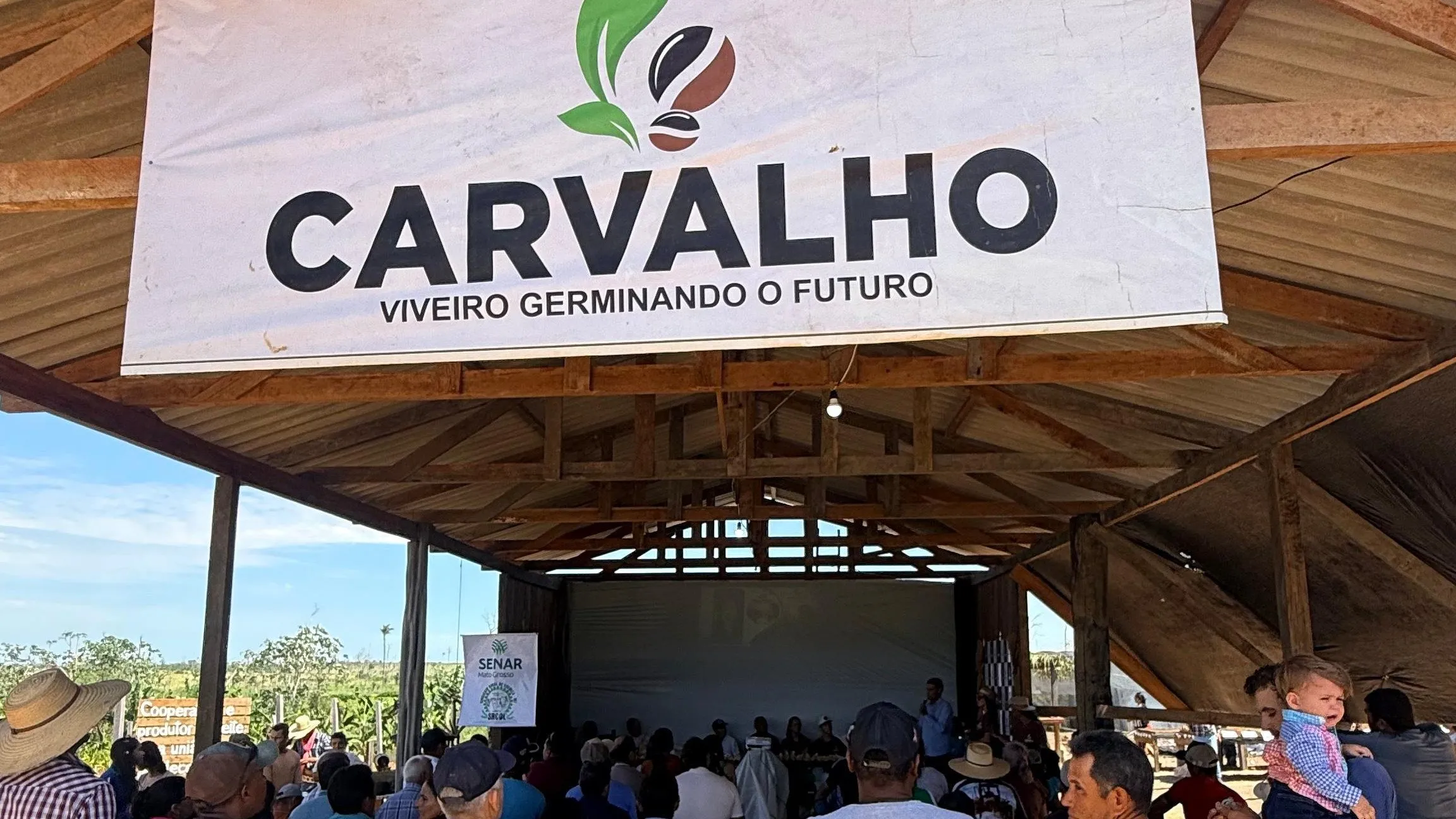
The cooperative
COOPERANTE — Cooperativa Carvalho Beans
Our coffee is grown by a legally constituted, member-owned Brazilian cooperative — not by an unnamed group of farmers assembled for a marketing story.
What is COOPERANTE — Cooperativa Carvalho Beans?
A Brazilian agroforestry cooperative constituted under Lei 5.764/71, the federal law governing cooperative societies. It is owned by its member producers, operates on a non-profit-distributing basis, and exists to receive, process and market its members' production.
A Brazilian cooperative is a specific legal form, not a loose association. It has a registered legal identity, a statute, mandatory governance organs and obligations to its members that are enforceable. Surpluses are returned to members in proportion to their participation rather than distributed as profit to shareholders — that is the structural difference from a trading company.
How is it governed?
By three organs required under Brazilian cooperative law: a General Assembly of all members, which is sovereign; a Board of Directors elected by the Assembly to run the cooperative; and a Fiscal Council that audits the accounts independently of the Board.
| Organ | Role |
|---|---|
| General Assembly | Sovereign body. All members, one member one vote regardless of production volume. Approves accounts, elects the Board and the Fiscal Council, and decides statutory changes. |
| Board of Directors | Elected by the Assembly. Runs the cooperative day to day within the mandate the Assembly sets. Current composition and officers on request. |
| Fiscal Council | Elected by the Assembly and independent of the Board. Audits the accounts and reports directly to members. Current composition on request. |
One member, one vote — regardless of how many bags a member delivers — is the defining governance feature of a cooperative and the reason a large producer cannot capture it.
How large is the cooperative?
Its registered details and activities are set out below. Membership numbers, the municipalities it operates across and the total area under coffee are shared with qualified buyers on request rather than estimated here, because a membership figure is exactly the kind of number a buyer or auditor will verify.
| Measure | Value |
|---|---|
| Legal name | COOPERANTE - Cooperativa Carvalho Beans |
| Legal form | Cooperative society under Lei 5.764/71 |
| Registered seat | Taquaruçu do Norte, Mato Grosso, Brazil |
| Statutory areas | Extraction, reforestation, bioenergy and agriculture |
| Seedling nursery | Run by the cooperative |
| Field Day | 2nd Field Day held on 30 May 2026 |
| Other products | Cassava flour, pumpkin flour, farofa and banana chips |
Available on request: CNPJ; member families; total area under coffee.
What does the cooperative do for its members?
Four things a producer cannot do alone at this scale: it receives and processes their production, it buys inputs at volume and supplies them at cost, it provides technical assistance in the field, and it markets the coffee collectively rather than leaving each producer to negotiate alone.
Receipt and processing
Takes in member deliveries, dries where needed, and runs the dry mill that turns cherry into export-specification green.
Inputs at scale
Buys fertiliser, seedlings and equipment at volume and supplies them to members, at prices an individual smallholder cannot reach.
Technical assistance
Agronomic support in the field — the mechanism by which quality improves across the whole membership rather than farm by farm.
Collective marketing
Sells pooled production as lots large enough to interest an exporter or a roaster, which no single member could assemble.
What is the relationship between Colinza and the cooperative?
This needs to be stated precisely rather than implied, because buyers and auditors will ask and an evasive answer is a liability. The commercial and ownership relationship is being formalised and is published here in full once it is.
Buyers who need the detail before then (the supply agreement, any ownership link, exclusivity, and how pricing between Colinza and the cooperative is set) can ask us directly, and we answer in writing.
What is already true and verifiable: the coffee Colinza sells is grown by members of this cooperative, and it is milled, roasted and packed at origin rather than sourced anonymously on the Brazilian domestic market. The formal structure behind that will be documented here rather than described in general terms.
Request green offerings
Tell us what you roast and at what volume, and we will send the current position with a basis.
Request green offeringsRequest a private label capabilities packet
Formats, minimums, lead times and certification status, in one document.
Request the capabilities packet