
Technical
Coffee Packaging and Shelf Life: Valves, Nitrogen Flush and Barrier Films
What actually determines how long roasted coffee stays good in the bag — barrier structure, residual oxygen, degassing valves — and how to specify packaging rather than guess at it.
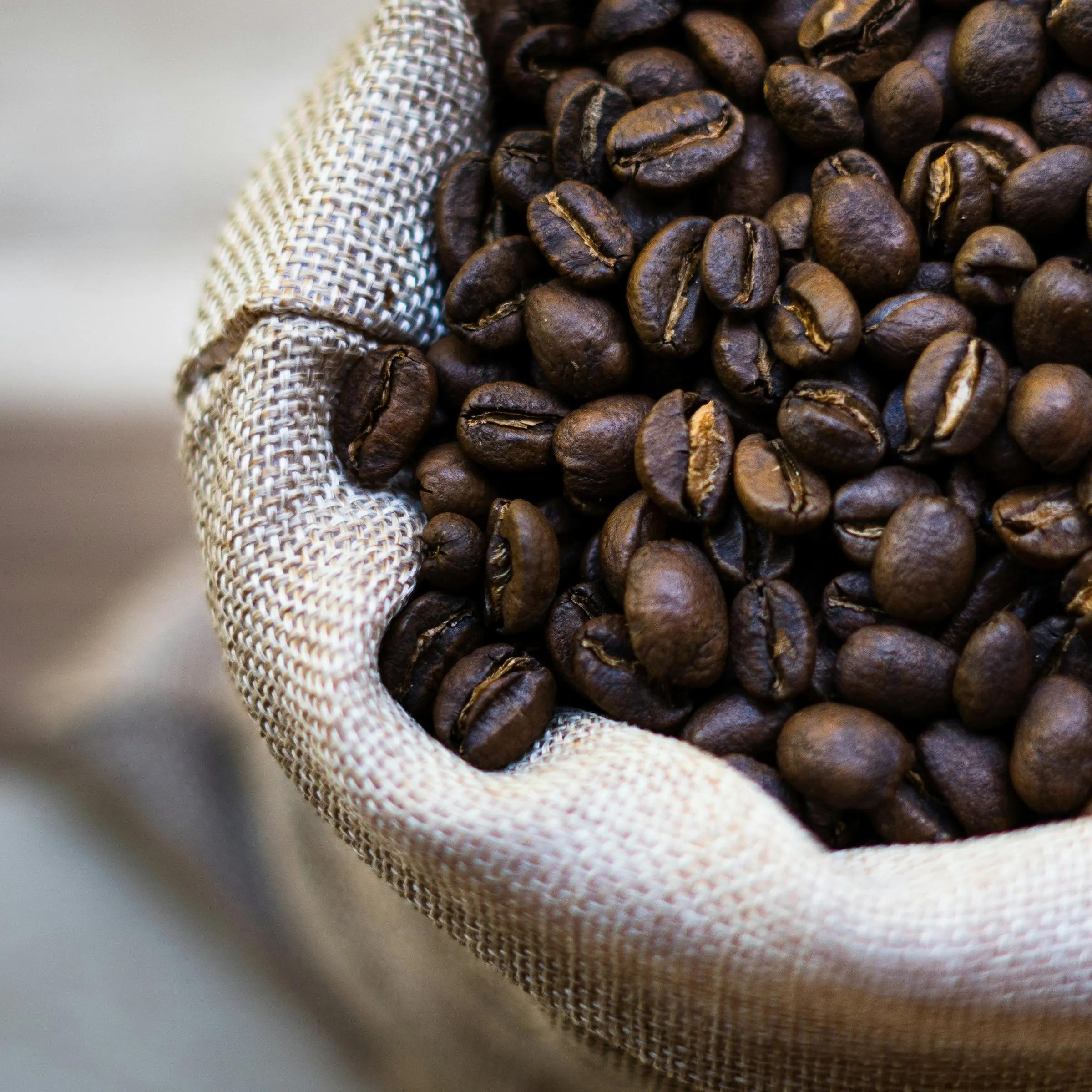
Most conversations about coffee freshness are really conversations about roast date, which is the least controllable of the variables that matter. What the coffee is sealed in, how much oxygen is sealed in with it, and how it is stored determine far more of the outcome.
This is a practical guide to specifying coffee packaging rather than hoping for the best.
What actually makes roasted coffee go stale?
Oxygen, mostly. Roasted coffee stales through oxidation of its lipids and loss of volatile aromatic compounds, and both processes accelerate with oxygen exposure, temperature and light. Moisture matters too, because coffee is hygroscopic and picks up water and odours from its surroundings.
Grinding accelerates everything by increasing surface area by orders of magnitude. Ground coffee stales in days what whole bean takes weeks to lose, which is the real argument for whole bean packaging rather than any romance about grinding fresh.
Why does roasted coffee need a valve?
Because it is still releasing carbon dioxide. Roasting generates CO₂ inside the bean structure and it escapes over days, most intensely in the first forty-eight hours. Seal fresh coffee in an airtight bag with no escape route and the bag inflates, distorts on the shelf, and can split.
The historical workaround was to rest coffee in open containers for a day or two before packing, which exposed it to oxygen at exactly the worst moment. The one-way degassing valve solved that: a small pressure-activated device that vents CO₂ outward and admits nothing inward. It is why coffee can be sealed within minutes of the cooling tray.
A valve is not a barrier. It manages pressure; the film manages oxygen ingress. A valve fitted to a film with poor barrier properties buys you a bag that does not burst while it goes stale on schedule.
Which barrier film should you specify?
Films are laminates, and the barrier layer is what matters. The common structures, in ascending order of protection:
| Structure | Oxygen barrier | Typical use |
|---|---|---|
| Kraft paper / PE | Poor | Short-cycle retail, aesthetic-led brands |
| Metallised PET laminate | Good | Mainstream retail, most private label |
| Aluminium foil laminate | Very high | Long shelf life, export, foodservice |
| Recyclable mono-material (PE or PP) | Varies widely | Sustainability-led programmes |
Mono-material structures deserve a note. They are the direction the industry is moving for recyclability, and the better ones now approach metallised performance with an added barrier coating. But “recyclable” describes the disposal route, not the barrier, and the two need to be specified separately.
Specify oxygen transmission rate (OTR) and water vapour transmission rate (WVTR) if shelf life matters to you. A supplier who can quote both has tested their film; one who can only describe it in adjectives has not.
Does nitrogen flushing make a real difference?
Yes, when it is measured and verified.
Flushing works by displacing air from the bag’s headspace with nitrogen immediately before sealing, so the coffee is sealed in an inert atmosphere. The meaningful specification is residual oxygen — the percentage remaining after flushing — and good practice targets low single digits or below.
The word “nitrogen flushed” on its own tells you nothing about how well it was done. Ask three questions: what is the residual oxygen target, how is it verified, and how often is it checked during a production run. A supplier measuring residual oxygen on sampled packs throughout a run is doing it properly. One who has the equipment but no measurement protocol may not be.
How should shelf life actually be stated?
As a figure attached to a format, a storage condition and a barrier specification — not as a single number for “our coffee”.
A useful shelf life statement reads something like: 12 months in a foil laminate with a degassing valve, nitrogen flushed to under 2 percent residual oxygen, stored below 25°C away from direct light. Every clause in that sentence is doing work, and dropping any of them makes the number unreliable.
Once a pack is opened, published shelf life no longer applies. Oxygen exposure governs from that point and the useful window is measured in weeks for whole bean and days for ground, regardless of what the unopened figure said.
Does packing origin-roasted coffee change the calculation?
It changes the arithmetic, not the principles. An origin-roasted programme adds an ocean leg — commonly a few weeks from South America to North America or Europe, plus customs clearance — before the coffee reaches a warehouse.
Whether that matters depends entirely on the application:
- Espresso blends benefit from rest and are typically at their best some days after roasting, so transit is partly working in your favour.
- Foodservice, vending and instant are formulated for consistency rather than for aromatic peak and tolerate it well.
- Light-roast filter specialty sold on delicate origin character does not tolerate it, because the volatile compounds that market pays for are exactly the ones that fade.
Any supplier selling origin-roasted coffee should publish transit times by destination and be willing to say plainly which applications it does not suit. A supplier who claims it suits everything has told you they have not thought about it.
Practical storage guidance for buyers
- Store sealed cases below 25°C, out of direct sunlight, away from strong odours.
- Do not store coffee near cleaning chemicals or aromatic foods. It absorbs both.
- Rotate stock by roast date, first in first out. A date code that encodes roast date rather than only a best-before is worth insisting on.
- For whole bean, resist decanting into display hoppers earlier than you need to. A hopper is an oxygen exposure chamber with a nice lid.
- If you freeze, freeze unopened packs, and let them return to room temperature fully before opening so condensation forms on the outside of the pack rather than on the coffee.
What to ask a packaging supplier
- What is the film structure, layer by layer?
- What are the OTR and WVTR figures for that structure?
- Is a one-way valve fitted, and what type?
- Is nitrogen flushing available, what is the residual oxygen target, and how is it verified?
- What shelf life do you support for that combination, under what storage conditions?
- What does the date code encode — roast date, best before, lot, or all three?
- What is the minimum order for printed film, and what are the digital-print alternatives?
- Is a recyclable mono-material structure available, and what does it cost in barrier performance?
The eighth question increasingly decides retail listings. The first four decide whether the coffee is any good when it gets there.
Frequently asked questions
How long does roasted coffee last in a sealed bag?
It depends on the barrier film, the residual oxygen after sealing and the storage temperature, far more than on the roast date. A high-barrier foil laminate with nitrogen flush holds quality for many months; a kraft bag with no barrier degrades in weeks.
What does a one-way degassing valve do?
It lets carbon dioxide escape without letting oxygen in. Coffee releases carbon dioxide for days after roasting, so a fully sealed bag without a valve inflates and can burst. The valve is what makes sealing coffee immediately after roasting possible.
Does nitrogen flushing really work?
Yes, when it is measured. Flushing displaces oxygen from the headspace before sealing. The specification that matters is residual oxygen percentage — ask for the target and the verification method rather than accepting the word nitrogen.
Should coffee be stored in the freezer?
For unopened, well-sealed packaging, freezing slows staling and is used commercially. For opened bags in a domestic setting the repeated condensation from taking it in and out usually does more harm than the cold does good.